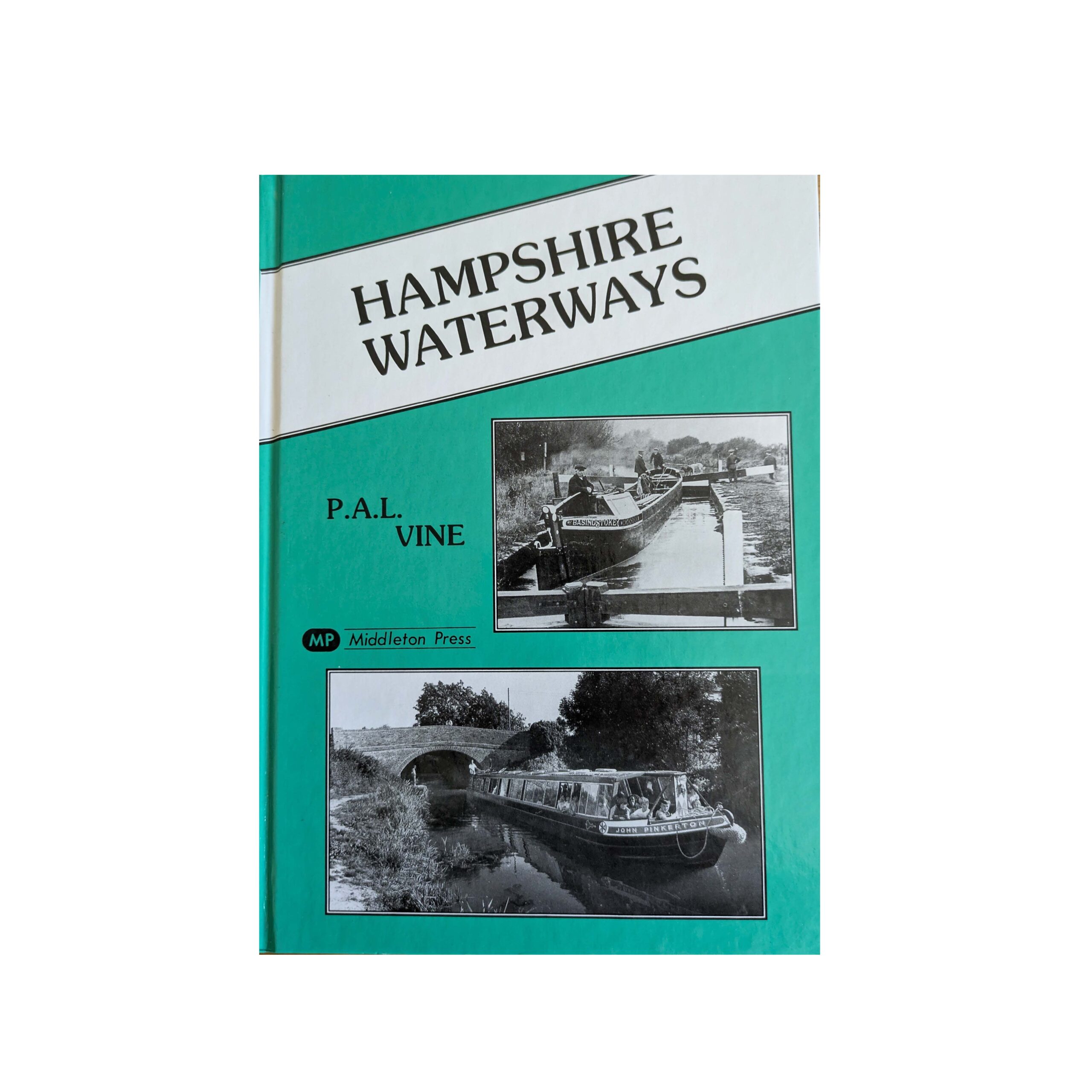
Hampshire Waterways
£9.95
This book is out of print. The copies available are second hand, in near-as-new or very good condition.
Paul Vine, author of the classic London’s lost route to the Sea, describes how, with the aid of 120 archive photos and maps, the waterways of Hampshire have fared from the days of their commercial importance to the present day, when the revival of pleasure boating in Hampshire became a reality with the reopening of the Basingstoke Canal.
Only 2 left in stock
Hampshire, best known for its chalk screens (the Anton, the Itchen, and the Test) and for its marinas on the Beaulieu and Hamble rivers, and Southampton Water and the Solent, is less well known for its navigable inland waterways. The natural rivers mostly run from the north to the south from Winchester, Andover and Salisbury to the sea. The numerous attempts to provide lateral links or to join them to the Basingstoke Canal or the Kennet & Avon Canal came to nothing, and the waterways which were built met with limited success. However, they did at various periods play a useful role in bringing up coal and taking agricultural products down to the sea.
The River Test was never made navigable, but with its tributary stream, the Anton, provided the water supply for the Andover Canal. Altogether, four canals were begun and three completed between 1794 and 1822. Both the Andover and the Basingstoke canals were opened in 1794, the Salisbury and Southampton Canal was partially opened by 1803 and the Portsea Canal, which formed part of the Portsmouth and Arundel Canal, was finished in 1822. None of these four generated sufficient revenue to pay a dividend. The Salisbury and Southampton Canal was left abandoned in 1807 when additional money could not be raised to complete it. The Portsea Canal was emptied in 1825 after saltwater had percolated into the drinking wells of the local inhabitants, and was not refilled.
The bed of the Andover Canal was used for a railway in 1865; traffic on the Itchen Navigation sharply declined after the opening of the London and Southampton railway in 1840, and the last tolls were collected in 1869. Regular traffic to Basingstoke ceased in 1901 and the Hampshire section of the Basingstoke Canal fell into disuse after 1920, but the canal was reopened from the Wey Navigation to Greywell Tunnel in 1991. This book deals only with the waterways made navigable by acts of parliament but it should be remembered that the Hamble was navigable for flat bottom merchant vessels as far as Pinkhaven, below Botley flour mill, in the 19th century.
Author: P A L Vine
Binding: Hardback
Published: November 1990
Pages: 96
Size: 240 x 172 mm
ISBN: 0906520843
Publisher’s Price (in 1990): £8.95