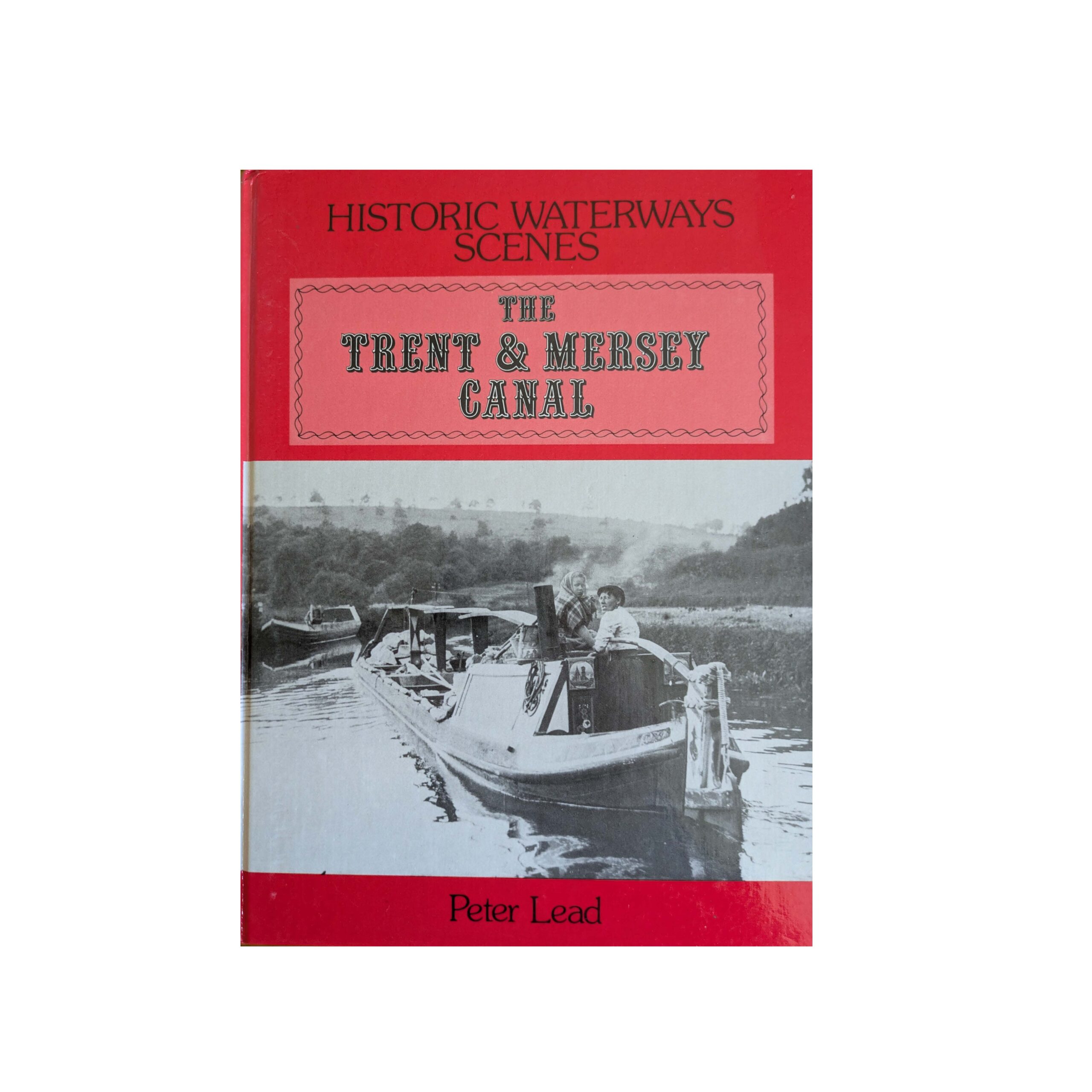
The Trent & Mersey Canal
£9.95
This book is out of print. The copies available are second hand, in near-as-new or very good condition.
Peter Lead uses over 130 archive photographs to illustrate the development over many years of the Trent and Mersey Canal and the important part it played in the history of the Midlands from Cheshire to Nottinghamshire. Each photo is meticulously described to explain exactly what is going on and why it is an important aspect in the development of the Trent and Mersey Canal and the waterways in general.
Only 1 left in stock
The story starts in the early 18th century when, although there were significant river navigations, use in their upper reaches was limited by frequent shoals, meanders and constant changes in depth and volume of the waters. The Trent was navigable as far as Nottingham throughout the 17th century, but efforts for improvements further upstream were blocked by determined land owners. An Act was passed in 1699 for improving the Trent Navigation from Wilden ferry to Burton, but little seems to have been achieved, and a further effort in 1714 appears to have shared the same fate. The improvements were subsequently made but even in 1766, Staffordshire merchants were complaining at the poor state of this river navigation and about the monopolists who controlled it.
The Potters of north Staffordshire made use of three river navigations: China clay from Cornwall and Devon was brought by coaster to the Mersey, where it was transhipped to flats for its journey up to the Weaver to Winsford, and thence by waggons and pack horses to the Potteries. For the return trip, the loads the waggons and pack horses carried where destined for Liverpool and the export market. Waggons and pack horses also made regular trips to Willington on the Trent navigation with loads of wear for the London market, and they carried back flintstones brought from the South Coast through the ports of Gainsborough and Hull. Sir Richard Whitworth described the weekly traffic to Bridgnorth on the River Severn as amounting to about 8 tonnes of potware to be conveyed to Bristol, with backloads of groceries, ‘foreign iron’ and white clay for Burslem. The Trent and Mersey Canal would change all this to the benefit of industrialists and the public alike. This is the story – in archive photos.
Author: Peter Lead
Binding: Hardback
Published: June 1980
Pages: 96
Size: 252 x 190 mm
ISBN: 0903485702
Publisher’s Price (in 1980): £5.95