Under the secretariat of the Inland Waterways Association (IWA), the All-Party Parliamentary Group (APPG) for Waterways convened last week to hear evidence from Paddle UK and the Walk Wheel Cycle Trust on the growing importance of waterways for recreation, active travel, public health, and environmental stewardship. This was alongside concerns about water quality, access restrictions and the need for investment in infrastructure.
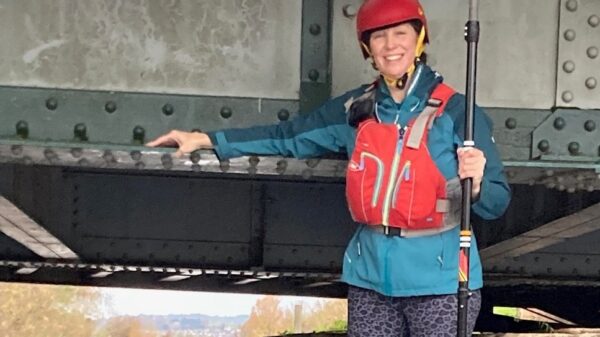
Ben Seal, Head of Access and Environment at Paddle UK, outlined the recent growth in paddle sport participation: an estimated 7.5 million people paddle annually across the UK, this means water sports participation now exceeds that of popular sports such as football or rugby.
Parliamentarians heard how waterways contribute significantly to both public wellbeing and the economy. Paddle UK referenced the Sport and Recreation Alliance’s “Reconomics 3.0” report, which found that water sports support around one million jobs, contribute billions to the economy as well as preventative health savings to the NHS.
However, concerns were raised about threats facing waterways and those who use them with water quality a major issue. Representatives warned that pollution and the corresponding negative publicity are discouraging participation.
The APPG also heard evidence about the positive environmental contribution volunteers and community groups make. Paddle UK gave the example of the removal of 11 tonnes of invasive floating pennywort by paddlers. This helped save navigation authorities significant costs, as well as citizen science schemes supporting water quality monitoring and public accountability.
Paul Twocock, Executive Director of Strategy and Engagement at the Walk Wheel Cycle Trust, outlined the charity’s work to improve walking, wheeling, and cycling access across the UK. Around 500 miles of these routes run alongside canals, with a further 600 miles along rivers.
He also described partnership projects delivered with CRT (Canal & River Trust), Scottish Canals, and local authorities, including towpath improvements along the Leeds and Liverpool Canal and lighting upgrades on Edinburgh’s Union Canal. He also discussed challenges associated with balancing shared towpath use in busy urban areas such as London’s Regent’s Canal.
Paul Twocock said:
“There’s nothing better than being alongside a canal or river for improving wellbeing, health and connecting with other people. We could open up those benefits to many more people across the UK, but as ever it’ll take some focused investment to make it happen and improvements in the way we deal with biodiversity net gain targets – that’s what we were urging parliamentarians to take action on this week.”
Accessibility was also a major theme throughout the session. Polly Maton from Disability Rights UK emphasised why it is important that waterways and water sports are accessible to disabled people, noting that access to the water’s edge can be just as important as access onto the water itself.
There was discussion of future policy opportunities, including the proposed Clean Water Bill, the Government’s forthcoming Access to Nature Green Paper, and proposals for new river walks announced in Labour’s manifesto.
The roundtable concluded with parliamentarians acknowledging both the social and environmental value of waterways, and the importance of improving access, water quality, and infrastructure to support growing participation across a wide range of activities.
Concluding, Lord German, also Honorary President of the Monmouthshire, Brecon and Abergavenny Canals Trust, said:
“Our waterways are unique and precious, delivering social, environmental and economic benefits, including regeneration, tourism, biodiversity and public wellbeing – as seen from this APPG meeting and the evidence given. I look forward to helping further this agenda”.
Photo L-R: (not all members were present at the end of the meeting) Joanna Richardson (British Marine), Baroness Jenny Jones, Charlie Norman (IWA), Ben Seal (Paddle UK), Paul Twocock (Walk Wheel Cycle Trust), Polly Maton (Disability Rights UK), Alice Gibb (Defra)