Dr David Owen’s Thames boating holidays of the 1950s were followed by canal cruising in his own boat, and by the late 1960s he had become a noted author of inland waterway books. He was a geologist with a museum career in Liverpool, Leeds and Manchester, and enthusiastic chair of IWA’s Manchester Branch. In September 1970, he led a small team of waterway supporters in the North West, some gathered from his night school talks at Manchester University on Industrial Archaeology and Inland Waterways, to form what would become the Boat Museum Society with the aim of opening the North Western Museum of Inland Navigation, at a site eventually secured from British Waterways at Ellesmere Port, where there was a range of disused waterway buildings at the junction of the Shropshire Union Canal’s derelict docks with the Manchester Ship Canal. It took until 1974 before an intense period of work party activities could start at the planned museum site, but there had been earlier activity elsewhere around the country rescuing old historic boats that might otherwise have been destroyed.
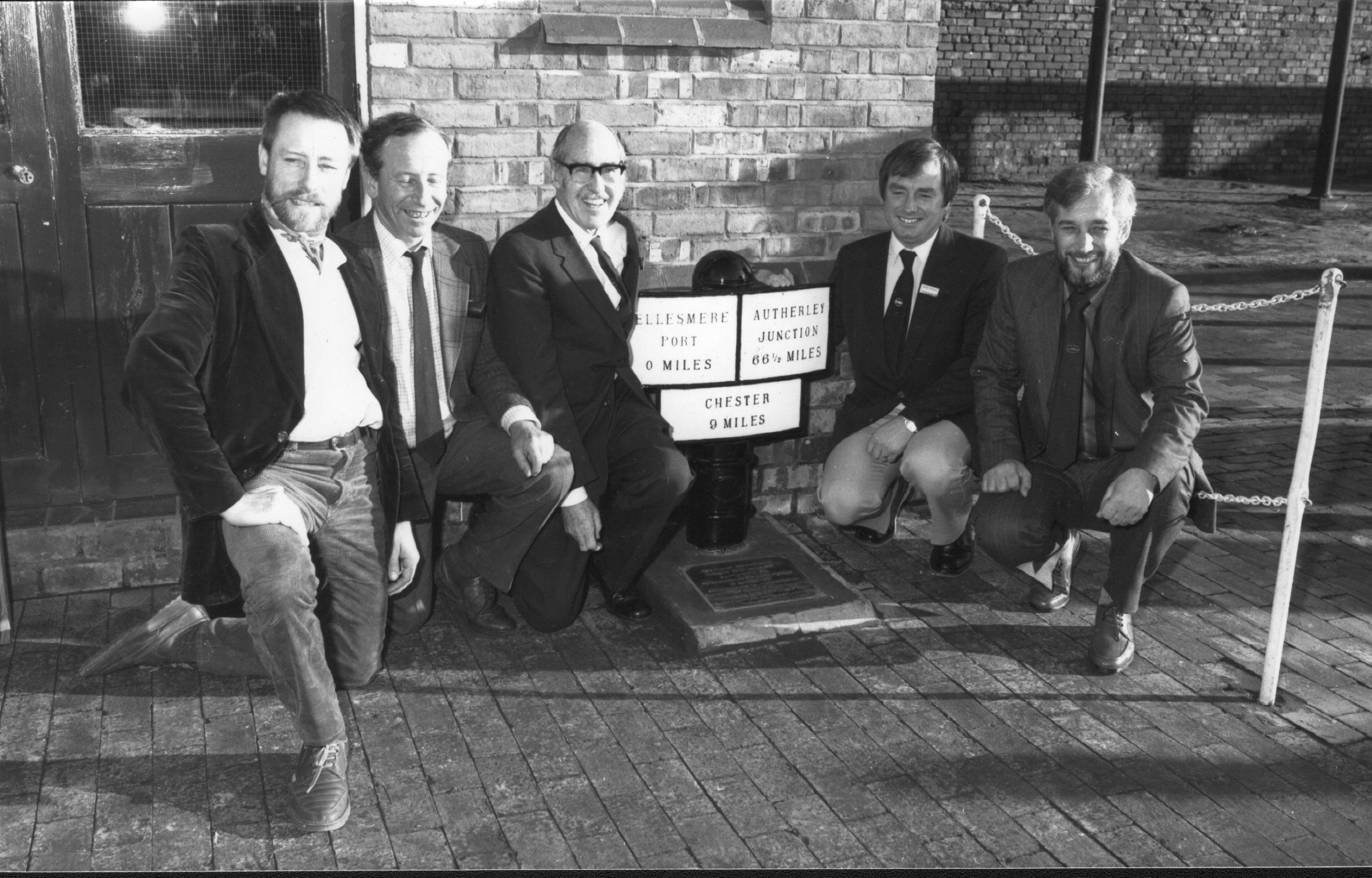
[The photo, above, shows founding Museum members, (from the left) Tony Lewery, Peter Froud, David Owen, Harry Arnold and Tony Hirst at the unveiling of a milepost on the Shropshire Union Canal at Ellesmere Port – the museum’s other co-founder, Edward Paget-Tomlinson was unable to be present for the occasion]
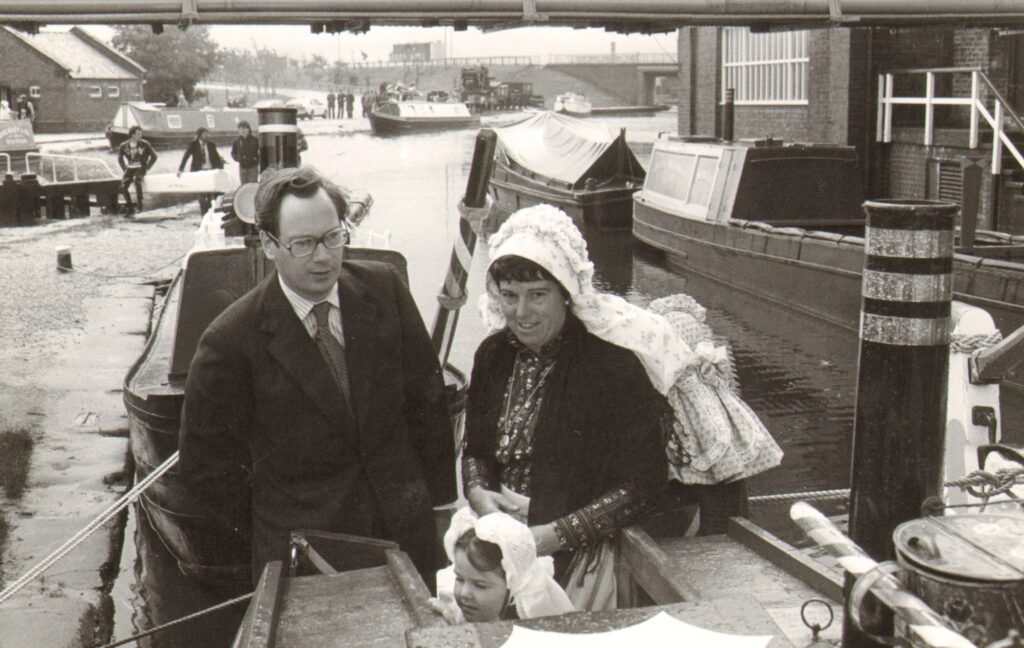
By 1976, the museum was ready for its formal opening by Sonia Rolt, widow of IWA co-founder Tom Rolt. David Owen was now elevated to IWA Manchester Branch’s President, and chair of the Museum’s Board of Management. The Island Warehouse had been secured from vandals, the top basin cleared and the Toll House restoration begun. The Museum’s exhibition had been designed by Tony Lewery in the ground floor of the Toll House. It was staffed by volunteers and initially open only at weekends. At the end of the summer, the museum closed for the season, but the restoration of the Toll House, and care for the collection of boats which had been brought to Ellesmere Port, continued. The Queen and the Duke of Edinburgh visited in November 1979.
In January 1981, the Boat Museum Trust, a partnership between NWMIN, the very supportive Ellesmere and Neston Borough Council and Cheshire County Council, was established to administer the Museum and Tony Hirst was appointed Director. This relationship between the Museum and the two local authorities was crucial in ensuring that the Museum became firmly recognised as an asset to the local community. Government funding aimed at regenerating Merseyside in 1981-82 enabled restoration of the remaining dock buildings, and there were visits from government minister Michael Heseltine and Prime Minister Margaret Thatcher. New exhibitions were opened and The Boat Museum, as it had become known, won a number of prestigious awards, including the Council of Europe’s Museum of Europe award jointly with the Museum du Vivant du Canal du Centre in Belgium for 1984.
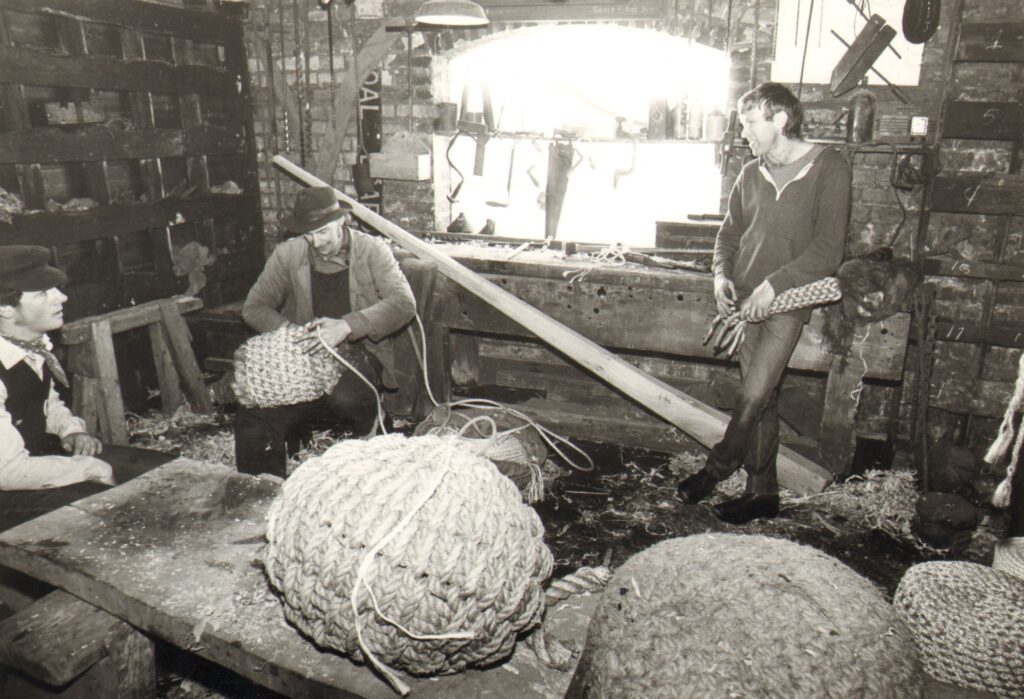
[The above photo show the boat builders’ workshop at the Island Warehouse at the Museum in its early years – IWA Collection]
1990 saw the opening of the David Owen Archive (now National Waterway Archive) on the ground floor of the restored slipway workshops by the Duke of Westminster. This is now the central archive for Canal & River Trust’s historic records, and also holds some IWA archives and IWA’s historic book collection on permanent loan.
Running the museum was not always plain sailing, however, and the museum’s survival became more challenging in the late 1980s and 1990s, when competition for people’s leisure time meant less income for running and developing. One of the museum’s many challenges was getting suitable insurance cover for its wide-ranging activities, which was covered by IWA’s then expanding insurance arrangements. Tony Hirst’s success in managing the museum led him to become chairman of the Association of Independent Museums between 1990 and 1994 and this led to many other museums around the UK joining with IWA’s insurance arrangements to improve buying power with insurers. For several years, IWA’s insurance arrangements extended to cover even the Royal Naval Museum in Portsmouth. Tony Hirst’s work was recognised with an OBE in 1995 for Services to Museums.
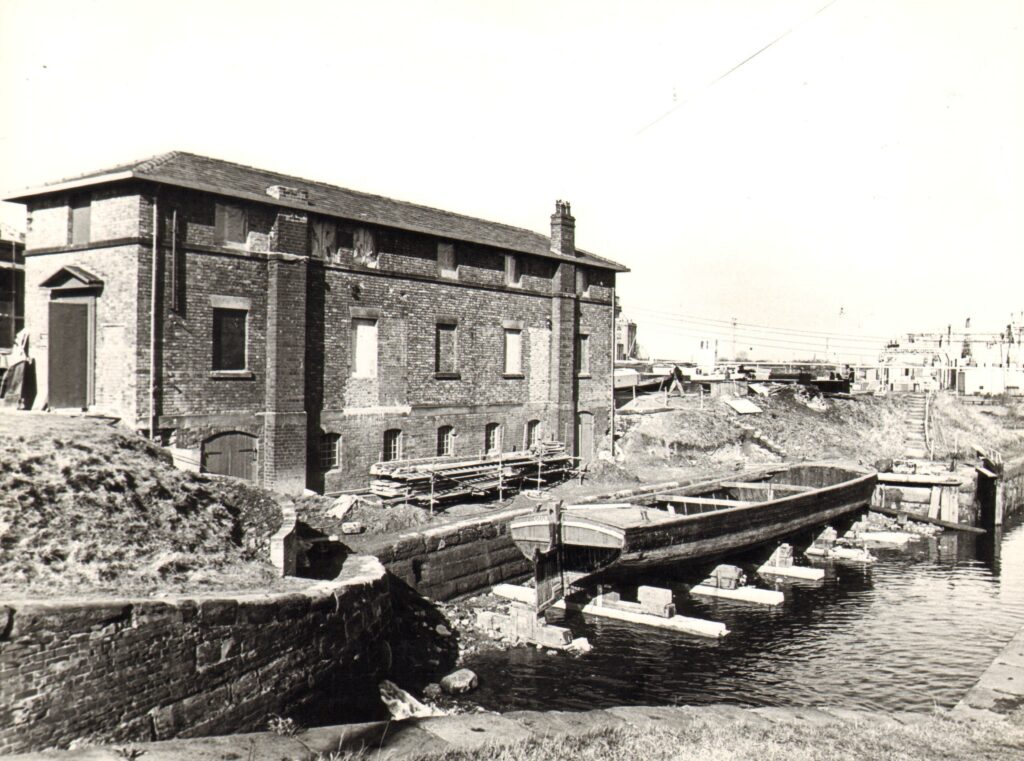
[The photo above shows the short boat ‘George‘ being prepared for exhibit at the Museum – by Harry Arnold / IWA Collection]
By the late 1990s, both the Boat Museum at Ellesmere Port, and British Waterways’ Museum at Gloucester Docks were running at a deficit and their future as separate museums had become unsustainable. Increasing running costs and greater competition for visitors’ leisure time had taken their toll. In 1999, it was agreed that both museums would join together, along with BW’s small canal museum at Stoke Bruerne, under a charity The Waterways Trust (TWT), controlled by British Waterways. Tony Hirst retired as Director of the Boat Museum at Ellesmere Port at the end of 1999. TWT was then absorbed into Canal & River Trust shortly after the latter became operational in 2012, which has ensured the Museum’s long-term survival.
[The top photo shows celebrations at the official opening – by W. Broadhurst / IWA Collection]
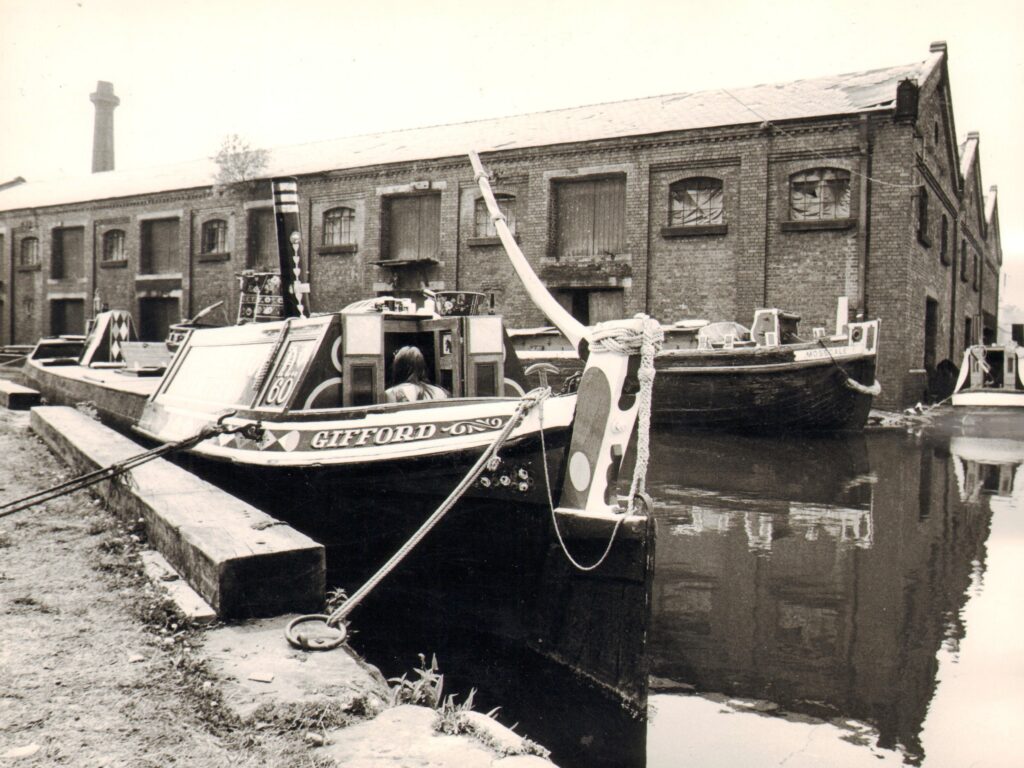
[Photos below show another royal visitor, the Duke of Gloucester – IWA Collection; and museum exhibits ‘Gifford’ and Mossdale. Gifford was given to the museum by co-founder Edwards Paget-Tomlinson – photo by Harry Arnold]