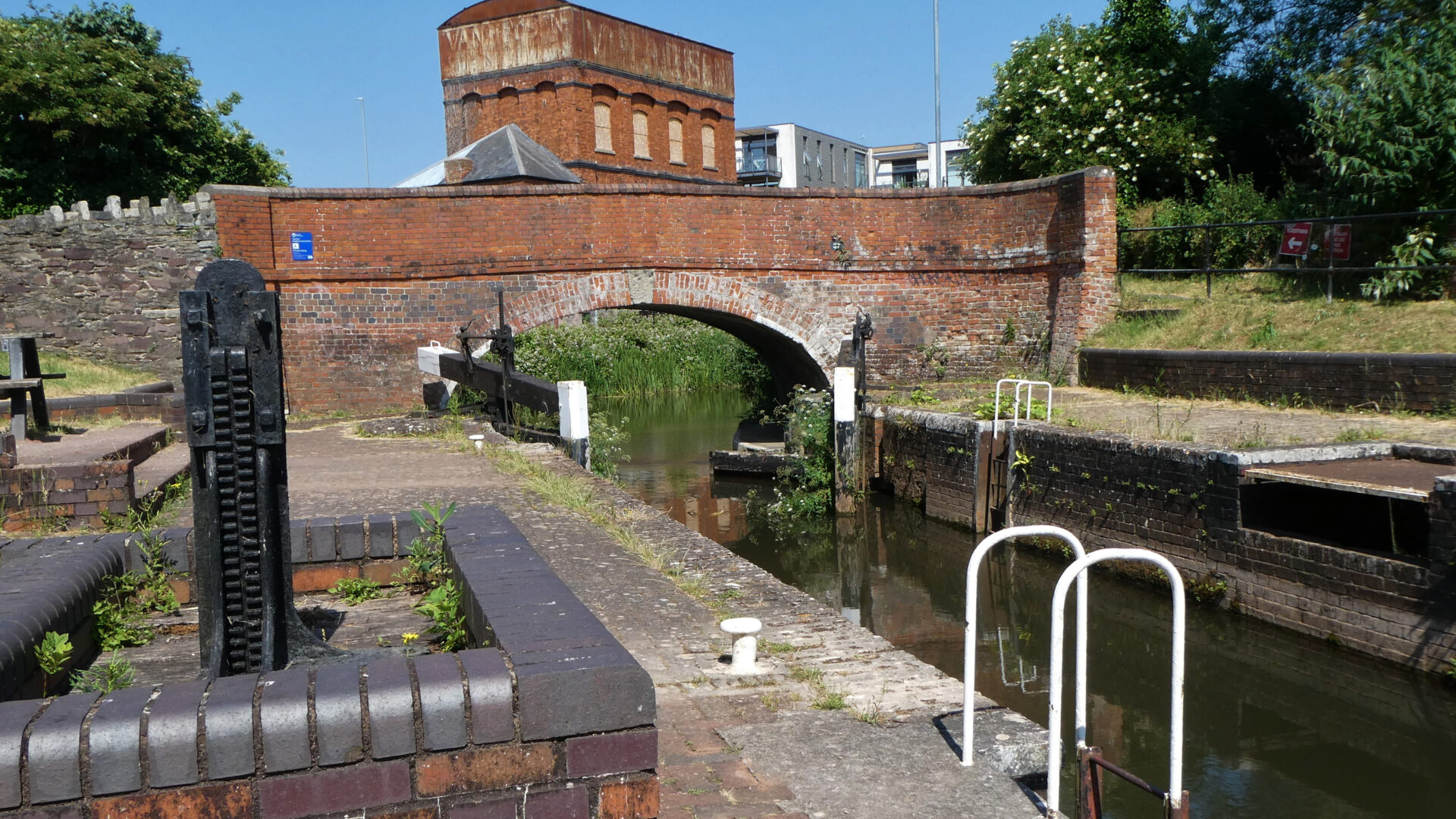
In a joint response to the current public consultation regarding the A379 Bridges Replacement Scheme, IWA and FESCHH say they also believe that the consultation is unrepresentative.
The consultation, entitled A379 Bridge Road, Exeter: Bridge Replacement Scheme, runs from 15th June – 27th July 2026. Despite Devon County Council proposing five options for the new bridges at stakeholders’ meetings in October 2025, the consultation presents only one for the public to comment on, which proposes replacing the bridges at a similarly restrictive height as the current bridges.
The Exeter Ship Canal provides a five-mile navigable route between Exeter Canal Basin, in the heart of the city, and the English Channel (via Turf Lock and the Exe Estuary). The two, adjacent bridges carry the A379, a busy dual carriageway, across the canal at its mid-point. Currently, they have exceptionally low air drafts (the clearance between water level and underside of a bridge) which present a barrier to boaters, paddleboarders, cyclists and pedestrians.
IWA representative Ray Alexander said: “Devon County Council appears to be back-tracking on its own Strategic Outline Business Case (SOBC) for the Scheme, which has previously been approved by the Department for Transport. For example, the SOBC identified the potential for cyclists and pedestrians to pass underneath the new bridges if they were built higher, but this significant safety benefit would be lost if they now press ahead without doing so.”
IWA and FESCHH point to numerous opportunities and benefits that raising the height of the bridges could bring to the area’s community, economy and environment. These include:
- Increasing active travel opportunities and safety.
- Enabling sustainable freight use of the canal.
- Increasing business and employment opportunities.
- Reducing pollution and improving the environment.
Ray Alexander added: “At a time when towns and cities throughout the country are introducing congestion management measures and seeking low-carbon transport alternatives, it would be short-sighted to rebuild the A379 bridges at a height that discourages future, environmentally friendly freight opportunities on the canal.”
Ellen Stuart of FESCHH points to the opportunities for boosting business and employment. She said: “Increased use of the Exeter Ship Canal would encourage more visitors to the canal basin, riverside quay and city, boosting existing businesses and creating the potential for new ones.”
Both IWA and FESCHH believe that the consultation is unrepresentative. They say that while the Scheme is entitled a Bridge Replacement Scheme, the consultation contains little information about the five bridge replacement options. Instead, it discounts all options except the one replacing the bridges with an unchanged maximum height and focuses on walking, cycling and public transport measures along the A379 dual carriageway.
Ray Alexander said: “Our engagement with key interested parties and elected representatives has revealed substantial support for the option of raising the height of the canal bridges, including from the Exeter Harbour Board and Exeter MP Steve Race. It is our view that a consultation cannot be considered representative if it effectively dismisses an option that has demonstrated significant public support without presenting the full case both for and against it.”
Ellen Stuart concluded: “The Scheme proposes spending up to £50 million of public money (85% from the Department for Transport) on replacing the canal bridges and associated works. If this investment is to serve Exeter and Devon for the next 60+ years, it should future-proof Exeter Ship Canal for leisure, freight and passenger use, rather than merely reproducing the existing constraints. We should be building for the future, not the past.”
Full Response to Devon County Council Can be found here.