IN SUMMARY
IWA has strongly challenged CRT’s new draft Restoration Delivery Plan (RDP), arguing that it treats restoration as a low priority rather than a core charitable objective. Several major restoration projects (including the Grantham Canal, Wendover Arm, and Pocklington Canal) have stalled under CRT ownership. The RDP would see volunteer groups face new financial burdens and bureaucratic obstacles that seem contrary to the collaborative spirit that CRT purports to offer, and a different mindset to that with which British Waterways delivered spectacular reopenings 25 years ago. As a critical friend to CRT, IWA is leading the charge to refocus attention on restoration, engaging directly with CRT’s senior management and its new CEO to ensure waterway restoration receives the leadership, support, and priority it deserves.
THE BACKGROUND
After consulting widely with restoration groups and other interested parties we have concluded that CRT’s plan is misguided because it addresses symptoms, not underlying issues. IWA has always thought of ourselves as a critical friend to The Trust, and on this issue, we must lean into the former description of our long relationship.
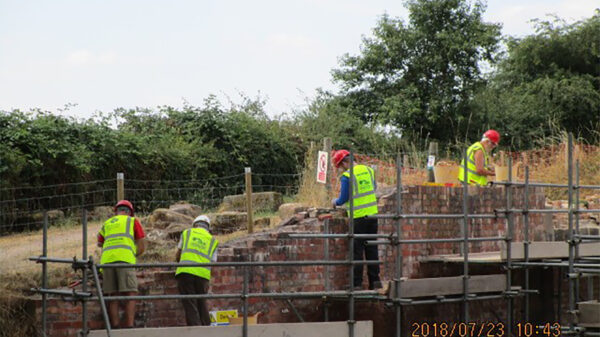
Restoration work has been halted on several restoration projects where CRT is a landowner, either owning most of the waterway, as in the case for the Grantham Canal, the Wendover Arm and Pocklington Canal, or where it is a minority landowner, as with the Cromford Canal. In fairness, in some cases, CRT says work has stopped because of Health & Safety arrangements, or environmental issues, but it most case it just claims that it doesn’t have the resources to review work plans or respond to restoration groups’ correspondence.
However, waterway restoration is one of CRT’s principal objectives alongside other important objectives as maintaining the navigable system, heritage and natural environment and landscape – yet the RDP seems to position waterway restoration as a something it might consider when funds permit. We think this is an abandonment of one of CRT’s principal duties.
The RDP requires restoration promoters to commission professional studies for planned works, and to pay CRT such studies and work proposals to be reviewed by additional staff or contractors. This has led to some outrage that CRT planned to charge £40 per hour to deal with correspondence and plans put forward by them. Other complaints concern external training courses to be undertaken at considerable expense although this requirement has since been reduced to compulsory on-site training. The latest draft of CRT’s Plan (published this summer) as part of a consultation met strong criticism from several restoration groups, particularly where works had been stopped, resulting in financial cost and volunteer disillusionment. A planned WRG Canal Camp on the Cromford Canal had to be cancelled, for example.
CONCERNS & CHALLENGES
Overall, it is our view that the plan reads as a defensive document; more like a commercial business on a cost-cutting mission, far from the ‘can do’ manifesto and operational plan expected of a high-profile national charity.
So, on the one hand, CRT wants to be a leader of the restoration movement with a high profile at national events, but on the other hand it is custodian of multiple canals that were abandoned by its predecessors, but for which it is frustrating work to restore.
25 years ago, with Lottery funding and regional development agency support, the then British Waterways Board management launched ambitious plans to revive and regenerate these waterways leading to spectacular restoration reopenings: the Huddersfield Narrow, Rochdale, Droitwich, Forth & Clyde, and Union canals are fine examples. Momentum has now faltered in a more difficult economic climate, and CRT is perceived, rightly or wrongly, as a blocker of restoration.
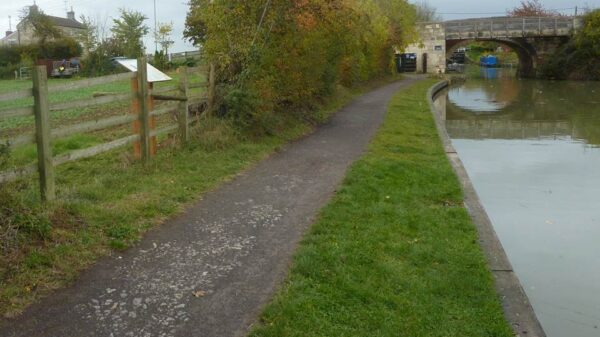
We are clear about the challenges: The Grantham Canal, for example, is a complex and major restoration, on the other hand the Pocklington Canal and the Wendover Arm, both wholly owned by CRT are probably the two easiest waterway restoration schemes in the country, notwithstanding that the Wendover Arm has two difficult road crossings and some minor footbridges and pipes, yet these schemes have been dragging on for more than 50 and 40 years, respectively.
Surely, CRT, given its charitable duties, should be taking the lead on these restorations rather than leaving them to two small groups? We accept that CRT must adhere to building, environmental and heritage protection legislation, and in some cases restoration promoters need to improve their operational practices, and where required, we support CRT’s moves to raise standards. However, this needs leadership and support rather than just raising obstacles.
WHAT IS IWA DOING?
We don’t wish merely to criticise; IWA wants to work constructively to resolve challenges and to provide support. Over the years, IWA and the restoration sector have provided a broad range of professional services and know-how to bring about successful restorations. Work is also underway to ensure that IWA raises its support for waterway restoration and will do so as a 2026 priority. In conclusion, we are pleased to report that CRT is taking IWA’s views seriously. We are now engaged in direct meetings with senior management, the latest on 15th December, and we have ensured that Campbell Robb, CRT’s new CEO is fully aware of our concerns. We will continue to work constructively with CRT to achieve the best outcome for the waterways, including restoration.